Abstract
Keywords:
Method
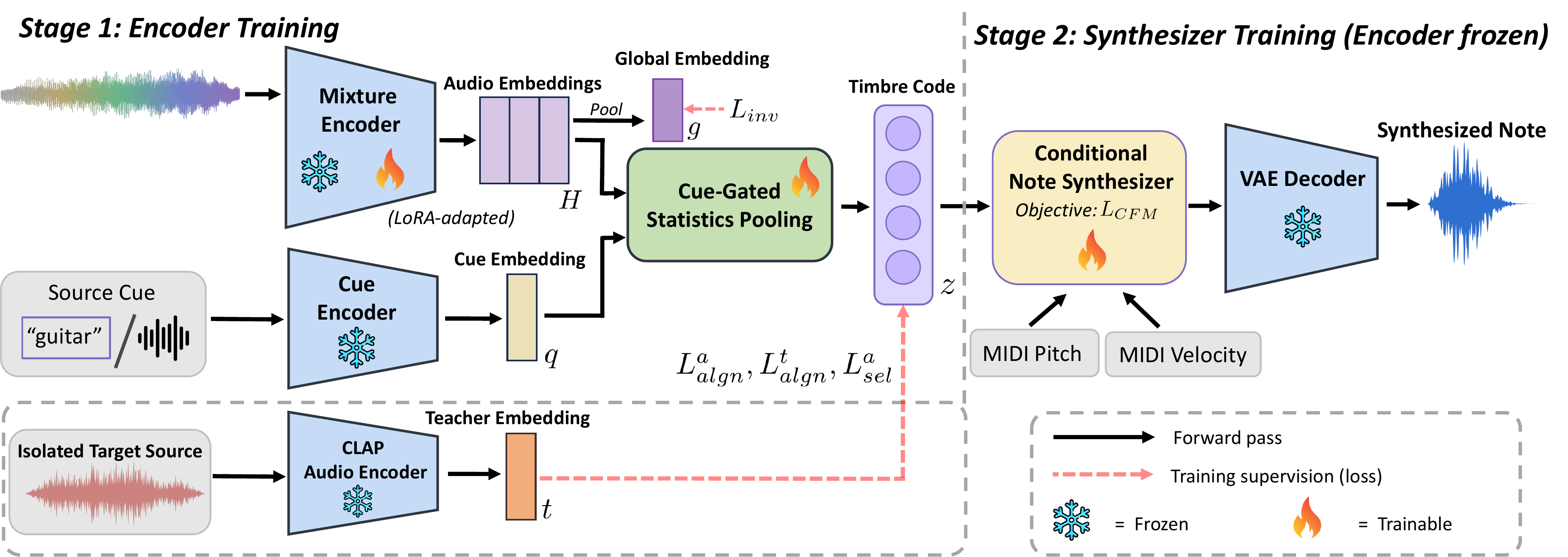
Main Results
| System and conditioning input | CLAP ↑ | FAD ↓ | MSS ↓ |
|---|
Listen: Audio Samples
All systems below use the same mixture, four-note scale, and best-of-8 candidate selection.
Every audio card is labeled with its own CLAP score against the ground-truth target, using
the same independent judge as the Main Results table above.
All audio on this page is 16 kHz mono WAV, so the effective bandwidth is capped at 8 kHz.
Citation
Full venue details and a BibTeX entry will be added once the paper's status is finalized.